Tuesday, 21 May 2013


Police Seek Rivers House Speaker, Amaechi’s Chief Of Staff Over Assassination Claim

RIVERS
STATE GOVERNOR, MR. ROTIMI CHIBUIKE AMAECHI (L) AND SPEAKER OF THE
RIVERS STATE
The Police in Rivers State has
invited the Speaker of the Rivers State House of Assembly, Rt.
Honourable Otelemaba Amachree and Mr. Tony Okocha, the Chief of Staff to
the Governor of Rivers State, Mr. Rotimi Chibuike Amaechi, following
their claim about a grand plot to assassinate Amaechi and his top
supporters in the state.HOUSE OF ASSEMBLY, RT. HONOURABLE OTELEMABA AMACHREE
Amachree
and Okocha had claimed that the withdrawal of the policemen assigned to
protect them was part of the assassination plot adding that the police
would any time soon withdraw the security detail attached to Amaechi to
pave way for his assassination by politicians opposed to his
administration as the rift between the governor and the Presidency heats
up.
Addressing a press conference in Port Harcourt, the controversial
Commissioner of Police in the state, Mr. Mbu Joseph Mbu, said the duo
have been invited for further questioning because of the assassination
claim.
Mbu also denied withdrawing all the security aides attached to both the Speaker and the Chief of Staff saying that he withdrew some personnel from the two officials because they had too many.
“The Speaker has raised very serious issues about security threat and about the attempt to assassinate the governor…
“That is a very serious issue and the Speaker would be invited and interrogated to give us more facts and throw light into this information…
“The Chief of Staff to the governor has also made pronouncements to the effect that there are plans to start bombing places, burning houses and so on. This also has to be investigated…
“As the chairman internal security in this state, I will not fold my arms and allow people to make inflammatory statements and create tension in the state.
“There is police abuse in certain quarters here in Rivers state. Everybody in government house wants to see himself as governor. If the Speaker of the Rivers State House of Assembly has 15 personnel from the Special Protection Unit of the Nigeria Police, as if those men are not enough, he still acquired nine from the Mobile Police Force, Squadron 19, so 15 plus nine! What is his entitlement?
“So what we have tried to do is to make sure that every appointee or political office holder gets what he is entitled to so that we can have enough men to go on patrols,” the controversial police chief said.
Meanwhile, the opposition political parties in Rivers State Friday pledged support for the embattled Governor, who has lately suffered harassments and intimidation from the Presidency.
The parties, under the aegis of the Conference of Nigeria Political Parties (CNPP) Rivers State chapter during a solidarity visit to Amaechi inside Government House, Port Harcourt, said the political crisis in the state was the main purpose of their visit.
Speaking of behalf of the parties, the leader of the CNPP, Dr. Minaebi Dagogo Jack said: “Our main purpose for this visit is particularly on the crisis that is facing the state. We hear of crisis in the State House of Assembly; we saw women protesting here and there. We saw youths carrying placards here and there in the state; the electronic and print media carrying stories of threat of all kinds…
“Your Excellency, we as leaders of the various opposition parties are greatly worried over these recent increases in security threats as a result of internal problems from one political party, the PDP in which you belong. We are aware that you are the leader of the PDP in Rivers State and more importantly the Governor of the state and so as partners of progress we deemed it most appropriate to pay you a visit and to state that Rivers State does not belong to one political party alone, but belongs to all of us including those of us from the opposition political parties.
“We cannot be quick to forget that some years ago, crises similar to this were pampered until it became a major monster that nearly swallowed everybody. We all felt the negative impact because good people refused to say anything. When you came on board, you took some bold steps to curb the situation.”
Mbu also denied withdrawing all the security aides attached to both the Speaker and the Chief of Staff saying that he withdrew some personnel from the two officials because they had too many.
“The Speaker has raised very serious issues about security threat and about the attempt to assassinate the governor…
“That is a very serious issue and the Speaker would be invited and interrogated to give us more facts and throw light into this information…
“The Chief of Staff to the governor has also made pronouncements to the effect that there are plans to start bombing places, burning houses and so on. This also has to be investigated…
“As the chairman internal security in this state, I will not fold my arms and allow people to make inflammatory statements and create tension in the state.
“There is police abuse in certain quarters here in Rivers state. Everybody in government house wants to see himself as governor. If the Speaker of the Rivers State House of Assembly has 15 personnel from the Special Protection Unit of the Nigeria Police, as if those men are not enough, he still acquired nine from the Mobile Police Force, Squadron 19, so 15 plus nine! What is his entitlement?
“So what we have tried to do is to make sure that every appointee or political office holder gets what he is entitled to so that we can have enough men to go on patrols,” the controversial police chief said.
Meanwhile, the opposition political parties in Rivers State Friday pledged support for the embattled Governor, who has lately suffered harassments and intimidation from the Presidency.
The parties, under the aegis of the Conference of Nigeria Political Parties (CNPP) Rivers State chapter during a solidarity visit to Amaechi inside Government House, Port Harcourt, said the political crisis in the state was the main purpose of their visit.
Speaking of behalf of the parties, the leader of the CNPP, Dr. Minaebi Dagogo Jack said: “Our main purpose for this visit is particularly on the crisis that is facing the state. We hear of crisis in the State House of Assembly; we saw women protesting here and there. We saw youths carrying placards here and there in the state; the electronic and print media carrying stories of threat of all kinds…
“Your Excellency, we as leaders of the various opposition parties are greatly worried over these recent increases in security threats as a result of internal problems from one political party, the PDP in which you belong. We are aware that you are the leader of the PDP in Rivers State and more importantly the Governor of the state and so as partners of progress we deemed it most appropriate to pay you a visit and to state that Rivers State does not belong to one political party alone, but belongs to all of us including those of us from the opposition political parties.
“We cannot be quick to forget that some years ago, crises similar to this were pampered until it became a major monster that nearly swallowed everybody. We all felt the negative impact because good people refused to say anything. When you came on board, you took some bold steps to curb the situation.”
Women Have Taken Rivers State Crisis To God’s Theatre – Amaechi
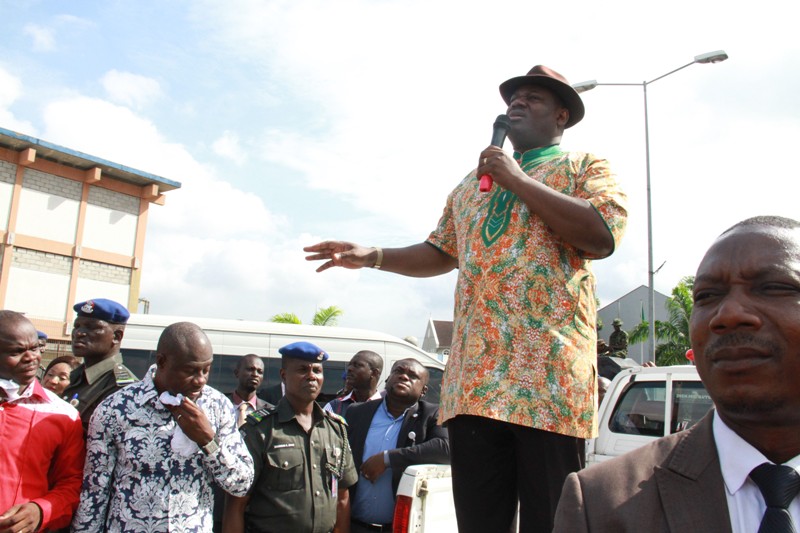
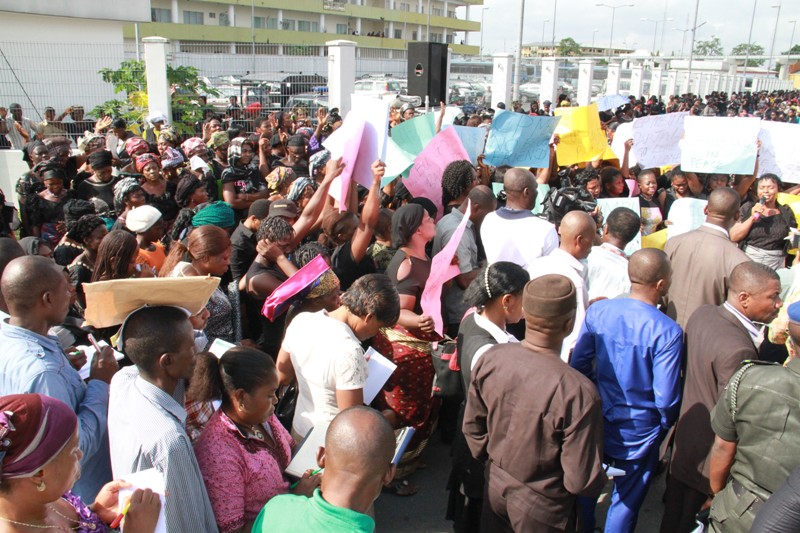
Rivers State Governor, Rt. Hon. Chibuike Rotimi Amaechi, says he identifies with the women of the State for taking the crisis affecting the State to God for intervention.
Represented by his deputy, Engr. Tele Ikuru, the Governor stated thanked the women “for going into prayers and after your prayers coming to Government House to say what you want to tell the government. Let me thank you because you are our mothers and women are known as the architects of peace. So when you see women stand up, know that indeed there is problem and any man born of woman must succumb.
When women stand up when women ask for peace every man must succumb. I want to thank you because you have moved this entire thing to another theater. The theater you have moved it into is the theater of religion. The theater of asking the face of God. You’re asking God to intervene. That is why you went to pray before undertaking this demonstration”.
Noting that “the Bible says, we wrestle not against flesh and blood but against principalities. What you have done now is to move this entire thin to another theater where you call upon God to come and take total control,” Governor Amaechi, who is also Chairman of the Nigerian Governors’ Forum (NGF), pointed out that “by reason of the fact that you have called upon God, by reason of the fact that you have knelt down and you have cried to God in heaven, God will hear you”.
“But I ask you, at this moment of challenges, at this moment of difficulties, to be prayerful because this is time for prayers. It is time for fasting, and whatever you ask and pray for, God will do it for you. Once more let me urge each and everyone of you to conduct yourself in a most peaceful and orderly manner because you have shown you’re women of peace”.
Earlier, one of the protesting women, Chief (Mrs.) Goodness Ukwu, told the Governor that they were in Government House to protest the continued retention of Mr. Joseph Mbu as Commissioner of Police in the State, pointing out that his activities recently aggravate the already tensed situation in the State.
“Wetin make we come here so be say una know say every place na gun, gun. Una know say our children don go loss for nothing sake. So wetin we want now be say make God help us, make Him bring peace for Rivers State. Make Joseph go for our State. Make Joseph Mbu go for our State. Enough is enough for crisis for Rivers State”.
Also speaking, Mrs. Violet Paul, said “e dey sweet our belle say we come Government House so that we go come tell our people wetin dey happen for Rivers State. They don come again, they come with their wayo to bring katakata for Rivers State,” asserting that wome in the State will resist any attempt to return the State to the dark days of turmoil and violence.
“We no gree oh. Una gree? Noo!!! Una gree? No! Una know before Amaechi come to power them dey carry gun dey waka. When people dey waka for road them say make people dey carry una hand up. Me abi one of them,” she said, observing that “see now wey Amaechi come. See better, better things wey him dey do for Rivers State. Our children wey no dey go school, now before 5 O’clock, them don get up go prepare for school. Amaechi don build schools everywhere. Me as I dey here, na free medical care”.
Godswill Jumbo
Acting Press Secretary to the Deputy Governor
State Of Emergency: Special Forces Storm Adamawa

Determined to enforce the state of emergency in Adamawa State, the Nigerian Army yesterday started deployment of special forces in the North-Eastern State.
No fewer than 200 soldiers yesterday reported to 23 Armoured Brigade, Yola State capital, while more troops were expected to arrive in the state capital in a military air craft from Abuja. They will be deployed in strategic locations across Adamawa State.
The troops who were received by the Brigade Commander, Brigadier- General Fatiai Oladipo Alli,who is also the Operational Officer of the Special Squad, warned the troops against professional recklessness.
He charged them to strictly confine to the rules of engagement of curbing the on-going insurgency and breach of law and order. Gen. Alli frowned at the soldiers against contravening the rules of their engagement. He also charged them against molesting innocent civilians in their areas of operations.
Fielding questions from newsmen, shortly after the address, Gen. Alli lauded the cooperation of the state government and the general public towards the activities of the insurgents saying that it is a national assignment that must be carried out with high sense of professionalism.
Multiple-Drug Resistant TB: The Global Community Under Siege

The incidence of multi-drug resistant tuberculosis (TB) is increasing, leaving the global community
with the fear of the inevitable, which is increase in TB infections worldwide.
In Nigeria,an estimated 4000 cases have been identified with the Federal Government responding by importing second-line drugs to contain the development. With the Human Immuno-deficiency Virus (HIV) disease easily hooking up with TB in patients, the fear of spread of TB through multi-drug resistant tuberculosis becomes intense.
Multi-drug resistant tuberculosis is TB which is resistant to routine TB drugs like Rifampicin and Isoniazid,which are the two key drugs used in treating drug sensitive TB.Multi-drug resistant tuberculosis can be developed if a patient does not complete treatment for drug sensitive TB.
As a measure to ensure that patients complete their treatment for drug sensitive TB ,the Directly Observed Treatment Short course(DOTS) was introduced to make sure that any diagnosed TB patient swallows the TB drugs regularly as he is supposed to for the six months duration of treatment.
Statistics show that about 30 per cent of deaths recorded in Nigeria are caused by tuberculosis together with HIV infections among the poor population in the country.
A Public Health expert from the University of Ilorin Teaching Hospital, Dr. Busayo Agbana while delivering a paper titled Poverty, Illiteracy and Tuberculosis, at a seminar in Ilorin noted that Nigeria ranks 4th of 22 countries in the world with the highest burden of tuberculosis and 1st in Africa, with estimated cases of 283, 100, 000 people infected with TB and HIV.
He said currently Nigeria records 120, 000 new case of TB yearly. Dr. Agbana explained that even with government establishment of the TB and Leprosy control system, there is still cases of transmission through direct infection.
He noted that another cause of the transmission is through over crowded environment to the susceptible host of the disease adding that the disease is curable and could be reduced through the use of anti- TB drugs. Many have expressed concern that Nigeria ranks 4th in TB countries and attribute it to over-crowding and poor sanitation.
Coordinator of Excellence Foundation International, Dr. David Olusegun said in a forum that the organization is carrying out TB awareness program in collaboration with the World Health Organization (WHO) -stop TB; the program is aimed at ensuring that TB and HIV infection is reduced or even totally eradicated. He explained that the organization has been able to cover some states of the federation adding that efforts are on top gear to ensure that the remaining states benefit from the program.
Experts have warned that tuberculosis is easily contracted through singing, sneezing, coughing and other forced respiratory maneuvers by patients suffering from the illness. Study revealed that about 1.6 billion people are infected worldwide by TB, and classified as the leading cause of morbidity and mortality in adults, killing about 2 million people yearly.
Tuberculosis is a chronic, progressive infection with a period of latency following initial infection. It occurs most commonly in the lungs. Pulmonary symptoms include productive cough, chest pain and dyspnea. It occurs almost exclusively from inhalation of droplet nuclei containing m. tuberculosis. People with pulmonary cavitary lesions are especially infectious.
Research also warned that droplet nuclei containing the disease may float in room-air currents for several hours, increasing the chance of spread.
About one quarter of household contacts stand the risk of acquiring infection. Transmission is enhanced by overcrowding, thus, people living in poverty or institutions are at particular risk. Meanwhile, once effective treatment begins, cough rapidly decreases and within weeks, TB is no longer contagious.
TB of the tonsils, lymph nodes, abdominal organs, bones and joint was once commonly caused by ingestion of milk infected with m. bovis, but such infection has been largely eradicated in developed countries by slaughtering cows that test positive on a tuberculin skin test.
Age has traditionally been considered an independent risk factor because the elderly have more years of potential exposure with more possibility of impaired immunity. In about 10 per cent of patients overall, latent infection develops into active disease, although the percentage varies significantly by age and other risk factors. In active pulmonary TB, whether moderate or severe disease, the patient may have no symptoms except “not feeling well” or may have more specific symptoms. Cough is most common.
At first, it may be minimally productive of yellow or green sputum, usually on rising but cough may become more productive as the disease progresses. Drenching night sweats are classic symptom but are neither common in nor specific for TB.
Dyspnea may result from lung parechymal involvement and spontaneous pneumothorax. Pulmonary TB is often suspected on the basis of chest x-rays taken while evaluating respiratory symptoms, such as chest pain and hemoptysis. If the chest x-ray is highly characterized in a person with TB risk factors, sputum examination is still required, but skin testing is often not done.
Patients who cannot produce sputum spontaneously can have it induced by aerosolized hypertonic saline. Otherwise, bronchial washings, which are particularly sensitive, can be obtained by fyberoptic bronchoscopy. Findings have it that, in immune-competent patients with drug-susceptible pulmonary TB, even severe disease and large cavities usually heal if appropriate therapy is instituted and completed.
Yet, TB causes death in about 10 percent of cases, often in those who are debilitated for other reasons. Disseminated TB and TB meningitis may be fatal in up to 25 percent of cases despite optimal treatment.
Most patients with uncomplicated TB and all with complicated illness, such as AIDS, hepatitis, diabetes, adverse drug reactions, and drug resistance should be referred to a TB specialist.
Patients are however advised on how to avoid spreading disease by staying at home, avoiding visitors and covering coughs with a tissue or hand. Surgical face mask for TB patients are stigmatizing and are generally not recommended for cooperative patients. According to Chief Research Officer and Head of TB Research,Nigerian Institute of Medical Research,NIMR, Yaba, Lagos, Dr Dan Onwujekwe, “the number of TB cases has been jumping up, riding on the epidemic of HIV, so if we see somebody with TB, we must test for HIV, if we see somebody with HIV, we must test the person for TB.
“I believe that the drug resistant TB has always been there. Why it appears that it is just arising now is because we were not searching for them before; and we were not searching for them because there were no treatments available for them.
We have been culturing TB in NIMR for over 20 years and we know that we have seen so many cases, a number of cases in our laboratory that are resistant to TB drugs. Those were multi-drug resistant TB, but now that we have a program for controlling multi-drug resistant TB, we are searching for them because we have a means of treating them and we are finding cases.
“So drug resistant TB has always been there in the population, we were not searching, we had not done a nationwide survey and we were not looking for it because there was nothing we could do. Now, there is something we can do and we should hurry up, find out cases and treat them so that we would be able to control it. “Multi-drug resistant TB is not common, they did a nationwide survey and found that the estimate is there are about 4000 cases in the country.
“If we use the WHO TB estimate for the country we are supposed to or may have about 107: 100, 000 cases of TB per 100, 000 of the population. If we have that, we expect that about 2.5 percent of them may have drug resistant TB. “We have some test that we can finish in 100 minutes and tell you that this person has TB that is resistant to Rifampicin and you can go ahead and use other test to see whether that person has multi drug resistant TB and you can finish that in three days.
So, we are in the best position now to find out the cases we have much more quickly. Nigeria is reported to have about 4,000 cases of multi-drug resistant tuberculosis.
Onwujekwe said,” the estimate is based on epidemiologic models. For countries that have not done a nationwide survey, WHO has a very reliable modeling which can give you an estimate of the number of cases found out. They are experts at epidemiologic modeling; I have worked with some of them, their estimates are always very reliable. So, they have done estimates and this is what they have found, but that estimate does not replace real surveillance in which you are actively looking for cases among TB patients “The risk of developing drug resistant or multi- drug resistant TB is one not completing treatment for drugs sensitive TB.
And that is why they are encouraging the use of Directly Observed Treatment Short course. We want to make sure that any diagnosed TB patient, swallows the TB drugs regularly as he is supposed to everyday for six months.
If people do not swallow the drug the way it should be swallowed they may develop resistance to TB drugs. And when the TB becomes active again, we may find that it does not respond to those drugs because the bacteria are very smart. “Once you are not taking those drugs, as it should be taken, the bacteria will develop enzymes which will destroy the drugs you are using, the key drugs.
So, instead of the drugs killing the bacteria, in fact some of them now feed on the drugs because we know that there are Rifampicin and isoniazid dependent bacteria causing tuberculosis that are being isolated.They feed on the drugs that we are using to treat it; instead of the drugs killing them, they will become robust from feeding on the drug. “The bacteria are very clever, they can re-engineer their genomes so fast to dissolve or digest the drugs , that is why they become resistant.
The smartest diagnostic techniques have identified the genes that the bacteria acquire which helps them code for enzymes that will destroy the drugs and they test for those genes. Once they detect those genes, you can know that this particular isolate is resistant to drugs.
“So, bacteria become resistant by developing resistant genes against those specific drugs and when they develop resistance genes against Rifampicin and Isoniacid- these are the two key drugs out of the four drugs used in treating drug sensitive TB,they become resistant. “Drug resistant TB is not treated like drug sensitive TB, the treatment program now requires them to be admitted for eight months in hospital settings, because they will need to take an injection everyday for those eight months.
People will find it difficult to take those drugs without being admitted; so for that intensive phase of treatment, they have to be admitted for eight months. “They are being treated in Mainland Hospital Yaba, UCH and Jericho Hospital both in Ibadan, University of PortHarcourt Teaching Hospital, Gana Henshaw Teaching Hospital, Uyo and other places that are coming up .So the second line drugs come in and they are sent to those places “The second line drugs are here. The government has brought them, as well as the Global Fund. .
The drugs are available even though they are costly,”he said. To reduce transmission and development of drug-resistant strains, treatment is monitored by public health programmes to ensure adherence, even if the patient is being treated by a private physician. TB care, including skin testing, chest x-ray and drug should be freely made available through public health clinics to reduce barriers to treatment.
Regularly, case management such as supervision of the ingestion of every dose of medication by public health personnel should be designed as a strategy to directly observe therapy.
Public health departments also have a crucial role to play by performing a home visit to evaluate potential barriers to treatment, by considering extreme poverty, unstable housing, alcoholism, or mental illness and seek other active cases and close contacts. Close contacts are, people who share the same breathing space for prolonged periods, typically household residents, but often includes people at work, school and places of recreation.
The exact degree of contacts that constitutes risk varies because TB patients vary greatly in infectiousness. For a patient who is highly infectious, as evidenced by multiple family members with disease or positive skin tests, even relatively casual contacts such as passengers on the bus, should be referred for skin testing and evaluation for latent infection.
Whereas, a patient who does not infect any household contact, is less likely to infect casual contacts.
Wizkid beat PSquare, Flavour, others to win African Artist of the Year

Wizkid
The awards took place at the La Palm Hotel in Accra
The awards took place at the La Palm Hotel in Accra
Soldiers Capture 120 Terrorists

Defence Headquarters (DHQ) yesterday, said that troops have again captured 120 Boko Haram insurgents in Maiduguri, Borno State, while burying one of their commanders killed during an offensive by the Special Forces.
An update on the operations from the DHQ in Abuja, signed by the Director of Defence Information (DDI), Brigadier-General Chris Olukolade, also disclosed that shallow graves in which insurgents hurriedly buried their killed members littered the ongoing operations areas.
“In Maiduguri, about 120 terrorists were arrested as they organized burial of one of their commanders who died in an encounter with Special Forces the previous day. The arrested insurgents are in custody of the Joint Task Force where they are being interrogated,” the statement disclosed.
It further stated that the Special Forces had now secured the environs of New Marte, Hausari, Krenoa, Wulgo and Chikun Ngulalo after destroying all the terrorists camps sited in the vicinity of these localities. Troops were said to have already begun interacting with locals and citizens, assuring them of their safety and freedom from the activities of insurgents.
“Terrorists fleeing towards Chad and Niger Republic are being contained as they have had encounter with Multi-National Joint Task Force in various locations towards the border. Advancing troops also observed a few shallow graves believed to be those of hurriedly buried members of the terrorist groups.
“Meanwhile, Defence Headquarters has observed the use of photographs purportedly taken in the areas covered by the operations and wishes to state that the photographs are questionable as they do not reflect any related reality of the social or geographical environment.
“This also makes the story they claim to depict of Nigerians fleeing to Niger Republic and other countries doubtful. The media is advised to always strive to associate stories with accurate pictures in order to avoid misleading the public”, the statement disclosed.
Subscribe to:
Posts (Atom)